The digital world is evolving faster than ever. More and more companies, organizations, and initiatives are beginning to recognize that technology should support people — not overwhelm them. This feels like the right moment to start noticing, documenting, and sharing these efforts.
That’s why we’re planning to create a directory of organizations that support digital well‑being.
Our goal is to gather examples of companies and projects that:
design technology in a human‑friendly way,
reduce informational noise,
respect the user’s attention,
prioritize cognitive ergonomics,
promote healthy digital habits.
This won’t be a ranking or a list of “the best”. Instead, it will be a map of inspiration — a space where anyone can see that there are alternatives to technology designed solely to capture attention, time, and engagement.
PBH was created from the same need: to build tools that work in the rhythm of the human mind, not against it. This directory will be a natural extension of that philosophy.
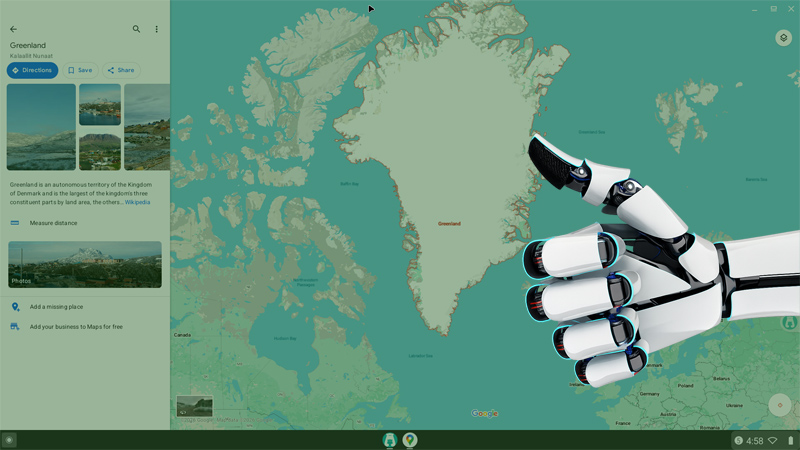
Polar Bear Helps is now available on Chromebooks that support accessibility services. If your device has Accessibility enabled, you can enjoy the same gentle visual filter as on Android — adjustable, comfortable, and fully local, with no personal or sensitive data collected or shared.”
Polar Bear Helps is based on encouragement rather than pressure, which is why starting with a high filter strength is not recommended. A filter that is too strong may cause discomfort, because your eyes and brain need time to adjust to a new way of interacting with your phone.
Why Filter Strength Matters
The filter reduces the intensity of visual stimuli that may have been a source of quick rewards for a long time. When these stimuli suddenly disappear, the nervous system can react with tension, irritation, or a sense of emptiness. This is a natural part of changing habits, but too abrupt a shift can make the process harder.
Recommended Starting Levels
40% is a suggested starting point that works well for many people.
20% is a gentler option if 40% feels too strong or uncomfortable.
Changing habits takes time. A softer start helps your mind adapt more smoothly, and you can increase the filter strength later when you feel ready.
Example from the Creator of Polar Bear Helps
The creator of the project began with a 40% filter. After ten months of using Polar Bear Helps, the filter strength increased to 60%. This shows that the process is gradual and built on encouragement rather than forcing quick results.
The Key Principle
Encouragement works in the long term. Self‑punishment or setting overly strict demands can make change more difficult. A gentle, steady approach helps the new habit take root and makes the transition more sustainable.
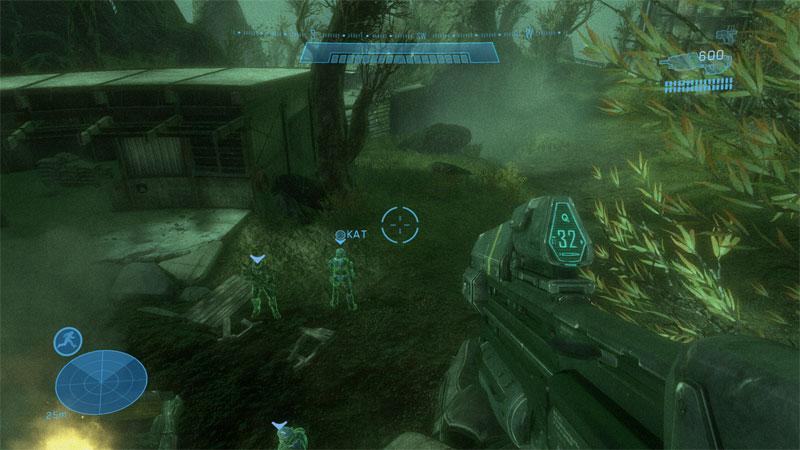
In Halo: Reach, you can activate Night Vision, which turns the game world into a green, monochromatic image. This is not just a visual effect — it creates an experience surprisingly close to what Polar Bear Helps does.
Halo: Reach in Night Vision mode — an example of how green monochromaticity changes the perception of the game and brings it closer to the Digital Bridge idea.
When NV is active:
colors disappear,
the world becomes less stimulating,
the green tint calms the mind,
and the game becomes tiring more quickly.
This is exactly the same principle used by Digital Bridge: green monochromaticity reduces stimulation and helps the player gently return to the real world.
Halo: Reach turns out to be much closer to the Polar Bear Helps philosophy than one might expect.
Games that allow Night Vision on demand
Night Vision appears mainly in tactical and military games, where it serves a functional purpose rather than a decorative one. Here are the most notable titles where NV can be activated manually:
Tactical and military shooters:
Tom Clancy’s Ghost Recon
Crysis
Metal Gear Solid V: The Phantom Pain
Ground Branch
S.T.A.L.K.E.R. GAMMA
Battlefield 3
Contractors (VR)
Horror and survival:
Left 4 Dead
SCP: Containment Breach
Arrogation: Unlight of Day
Other genres (rare):
Nightvision: Drive Forever
Why Night Vision appears almost exclusively in shooters
Night Vision is a tactical tool, not an aesthetic effect.
Shooters often take place in dark environments where NV makes sense.
NV provides tactical advantage — seeing in the dark, planning movement.
In other genres, NV adds nothing to gameplay.
It requires specific shaders and lighting setups that naturally fit military games.
This is why NV is mostly found in shooters — there it serves a purpose, not just a visual flourish.
A vision for the future: one Polar Bear Helps-inspired filter in game engines
I would like to see future game engines include a single filter inspired by Polar Bear Helps:
Green monochromaticity.
One unified effect that combines:
reduced visual stimulation,
a calming green tint,
a gentle lowering of arousal,
a natural soft landing after long play sessions.
Such a filter could activate automatically after extended gameplay — a subtle, healthy transition back to the real world. A practical implementation of the Digital Bridge concept.
As part of my ongoing work on how to support well‑being while using digital devices, I have published the Digital Bridge Manifesto. It introduces a new concept showing that technology can help us return to the physical world in a gentle, natural, and conflict‑free way.
Digital Bridge proposes a smooth transition from digital activity to analog activity by preserving a shared theme, atmosphere, or sensory experience. Instead of a sudden cut‑off, it offers continuity — reducing stress and resistance while supporting creativity and emotional regulation.
This approach has become a new element of Technology that cares — technology designed with care for the human being and for everyday functioning in a world that blends the digital with the real.