I’ve added my current Rapid rating from Chess.com to the About Me page. Chess is one of my daily rituals.
It’s funny how things evolve: I now have my first “team” – a one‑person chess squad competing under the Polar Bear Helps colors.
The closed testing phase of Polar Bear Helps has been completed. Thank you to all testers for your time, patience, and feedback — each insight helped refine the app before release.
A small step, but an important one. Polar Bear Helps is ready to move forward.
The digital world is evolving faster than ever. More and more companies, organizations, and initiatives are beginning to recognize that technology should support people — not overwhelm them.
This feels like the right moment to start noticing, documenting, and sharing these efforts.
That’s why we’re planning to create a directory of organizations that support digital well‑being.
Our goal is to gather examples of companies and projects that:
This won’t be a ranking or a list of “the best”.
Instead, it will be a map of inspiration — a space where anyone can see that there are alternatives to technology designed solely to capture attention, time, and engagement.
PBH was created from the same need: to build tools that work in the rhythm of the human mind, not against it.
This directory will be a natural extension of that philosophy.
We’ll share more details soon.

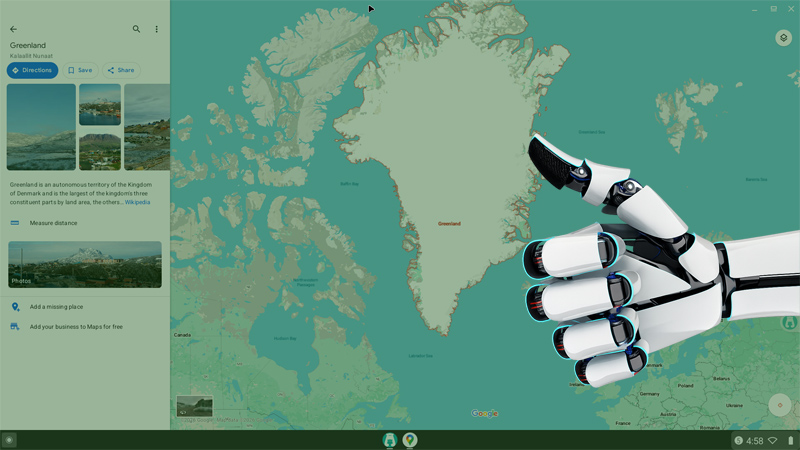
Polar Bear Helps is now available on Chromebooks that support accessibility services. If your device has Accessibility enabled, you can enjoy the same gentle visual filter as on Android — adjustable, comfortable, and fully local, with no personal or sensitive data collected or shared.”
We’re happy to announce that PBH (Polar Bear Helps) has officially published its Privacy Policy, effective March 28, 2026.
True to PBH’s philosophy — help without invading privacy — the app is designed to work without accounts, registration, or personal data collection.
PBH is safe because:
PBH stores only basic settings locally on your device — such as whether the filter is enabled and the last selected filter strength.
This data is removed automatically when you uninstall the app or clear its data.
Polar Bear Helps has reached an important milestone: the app is now available in 30 languages, making it accessible to users across many regions and cultural backgrounds. This broad localization strengthens the mission of supporting people who are sensitive to visual overstimulation and those who benefit from a calmer digital environment.
Global Language Coverage
The current version of PBH includes translations into the following languages:
This set covers a large portion of the world’s population and includes both major global languages and important regional ones.
The next development phase focuses on adding RTL (right‑to‑left) languages, which require additional interface adjustments. The first languages planned for implementation are:
These additions will significantly expand accessibility and open PBH to new regions.
If you’d like to see PBH translated into more languages, you can leave your suggestions in the comments. Community feedback helps shape the next steps and ensures the app grows in the direction users need most.
Which language do you think should be added next?
Polar Bear Helps is based on encouragement rather than pressure, which is why starting with a high filter strength is not recommended. A filter that is too strong may cause discomfort, because your eyes and brain need time to adjust to a new way of interacting with your phone.
The filter reduces the intensity of visual stimuli that may have been a source of quick rewards for a long time. When these stimuli suddenly disappear, the nervous system can react with tension, irritation, or a sense of emptiness. This is a natural part of changing habits, but too abrupt a shift can make the process harder.
Changing habits takes time. A softer start helps your mind adapt more smoothly, and you can increase the filter strength later when you feel ready.
The creator of the project began with a 40% filter. After ten months of using Polar Bear Helps, the filter strength increased to 60%. This shows that the process is gradual and built on encouragement rather than forcing quick results.
Encouragement works in the long term. Self‑punishment or setting overly strict demands can make change more difficult. A gentle, steady approach helps the new habit take root and makes the transition more sustainable.
Polar Bear Helps is built on two scientifically validated foundations, which is why its effectiveness is considered promising. The author believes that smartphones will stop functioning as machines that dispense constant rewards in a subtle and addictive way, and that people will begin to reclaim their lives, attention, and time.
When you start using Polar Bear Helps, you may experience emotions that were previously masked by constant stimulation from your phone. In the first days or weeks, you might notice:
These reactions are natural. Your brain has been accustomed to quick, frequent stimuli, and when they disappear, the nervous system needs time to adjust. If te pojawiające się emocje staną się trudne, rozmowa z kimś zaufanym lub specjalistą może być bardzo pomocna.
For a long time, your smartphone may have served as a source of immediate relief, distraction, or reward. When this mechanism is interrupted, the brain reacts just as it does to any change in habit: with temporary discomfort. This does not mean anything is wrong — it means the process of change has truly begun.
Entering this process consciously makes the transition smoother and more manageable.
What to Prepare in Advance
These difficult emotions will pass. Over time, your mind will adapt to a new rhythm, and the initial sense of emptiness will give way to calm, clarity, and a renewed sense of control. Polar Bear Helps is not a tool that gives you rewards — it is a tool that helps you reclaim yourself.

Modern digital interfaces are designed to capture attention: intense colors, high contrast, animations, gradients, and dynamic elements. This environment is visually attractive but also highly stimulating, leading to cognitive overload, visual fatigue, and increased arousal of the nervous system.
The Polar Bear Helps (PBH) application was created as an intervention that reduces the intensity of modern interfaces by applying a green monochromatic filter. Its foundations rest on two pillars:
This report presents the scientific basis for these two pillars and their potential in reducing overstimulation and supporting individuals who overuse technology.
1.1. Excessive color increases arousal and cognitive load
Color is one of the strongest visual stimuli. Research in cognitive psychology and HCI shows that too many colors increase the amount of information the brain must process, leading to:
A study by Yang, Qi, and Guo (2024) demonstrated that users perform tasks faster and more effectively in monochromatic interfaces than in colorful ones—especially under high cognitive load
(Source: Yang, S., Qi, L., & Guo, F. (2024). Effects of Icon Color Combinations on Visual Search Performance Under Different Cognitive Load Levels. Applied Sciences, 14(10). https://doi.org/10.3390/app14104212).
1.2. Monochromaticity calms the nervous system
Wilms & Oberfeld (2017) found that achromatic colors (grays, white, black) produce:
(Source: Wilms, L., & Oberfeld, D. (2017). Color and emotion: Effects of hue, saturation, and brightness. Emotion, 18(5). https://doi.org/10.1037/emo0000273)
This means that interfaces based on limited color palettes are less stressful and less tiring.
1.3. Monochromatic interfaces are less attractive — and that is their strength
Research on interface design shows that colorful interfaces are more engaging and attractive because they:
Monochromatic interfaces are less visually attractive, which means:
This phenomenon is well described in behavioral‑addiction and persuasive‑design literature
(Source: Turel, O., & Bechara, A. (2017). Effects of motor impulsivity and inhibitory control deficits on social media addiction. Personality and Individual Differences, 117. https://doi.org/10.1016/j.paid.2017.05.038 (doi.org in Bing)).
Thus, PBH’s monochromaticity can act as a brake on overstimulation.
2.1. Green reduces stress and tension
Environmental psychology has long studied the effects of green on humans. Findings are consistent: exposure to green—even digital green—can:
A review by Berto (2014) confirms that green stimuli support attention restoration
(Source: Berto, R. (2014). The role of nature in coping with psycho‑physiological stress: A literature review on restorativeness. Journal of Environmental Psychology, 38. https://doi.org/10.1016/j.jenvp.2014.01.002 (doi.org in Bing)).
2.2. Green supports concentration and cognitive performance
According to Attention Restoration Theory (ART), green:
Studies show that even brief exposure to green improves performance in concentration‑based tasks
(Source: Lee, K. E., et al. (2015). Restorative effects of viewing real forest landscapes. Urban Forestry & Urban Greening, 14(4). https://doi.org/10.1016/j.ufug.2015.07.005 (doi.org in Bing)).
2.3. Green is the least fatiguing color for the eyes
Ophthalmological research indicates that wavelengths corresponding to green are the easiest for the retina to process, reducing:
(Source: Küller, R., et al. (2009). The impact of light and colour on psychological mood: a cross‑cultural study of indoor work environments. Ergonomics, 52(2). https://www.ncbi.nlm.nih.gov/pmc/articles/PMC4383726/ (ncbi.nlm.nih.gov in Bing))
This makes green an ideal color for interfaces designed to reduce visual intensity.
What makes Polar Bear Helps unique is the combination of two scientifically validated mechanisms:
1. Monochromaticity → reduces stimuli and cognitive load
2. Green → lowers stress and restores attention
Together, they create an environment that is:
This is not aesthetics — it is a psychological intervention based on evidence.
4.1. Intense interfaces reinforce digital addiction
Research on behavioral addictions shows that:
(Source: Kuss, D. J., & Griffiths, M. D. (2017). Social Networking Sites and Addiction: Ten Lessons Learned. International Journal of Environmental Research and Public Health, 14(3). https://doi.org/10.3390/ijerph14030311 (doi.org in Bing))
This means modern interfaces are designed to be hard to put down.
4.2. PBH’s monochromaticity reduces screen attractiveness
PBH intentionally reduces the visual appeal of the device:
This is a therapeutic mechanism, not a flaw.
In addiction literature, this is known as cue‑reactivity reduction
(Source: Hormes, J. M. (2019). Under the influence of Facebook? Excess use of social networking sites and drinking motives, consequences, and attitudes. Addictive Behaviors Reports, 9. https://doi.org/10.1016/j.abrep.2019.100176 (doi.org in Bing)).
4.3. Green further reduces arousal and the impulse to use the device
Because green:
the user becomes less prone to compulsive phone use.
This is important because behavioral addictions are reinforced by stress — and PBH works in the opposite direction.
Polar Bear Helps works by applying a green monochromatic filter to the device screen, modifying how the user perceives visual stimuli. Its mechanism can be described across three complementary layers: perceptual, cognitive, and emotional‑physiological.
5.1. Perceptual layer — reducing stimulus intensity
PBH softens the screen, leading to:
(Source: Turel & Bechara, 2017, Personality and Individual Differences, https://doi.org/10.1016/j.paid.2017.05.038 (doi.org in Bing))
5.2. Cognitive layer — reducing load and improving focus
Thanks to monochromaticity:
(Source: Yang, Qi & Guo, 2024, Applied Sciences, https://doi.org/10.3390/app14104212)
5.3. Emotional‑physiological layer — calming effects of green
Green:
(Source: Berto, 2014; Lee et al., 2015)
5.4. PBH as a “brake” on overstimulation
PBH:
(Source: Hormes, 2019)
5.5. PBH as a tool supporting recovery from digital addiction
PBH acts on addiction mechanisms by:
(Source: Kuss & Griffiths, 2017)
Polar Bear Helps is not a decorative application.
It is a psychological intervention that operates on the levels of:
Monochromaticity reduces chaos and screen attractiveness.
Green calms, restores, and lowers arousal.
Together, they create an environment that:
The creator of the application — Sławomir Polarny — is fully open to:
Research can begin after the application is published, once users start generating initial data and experiences.
PBH does not fight technology —
it softens it and returns control to the user.
It is an application that does not just change the screen.
It changes how the screen affects the human mind.